
Heat Exchange Examples: A Practical Guide for Engineers

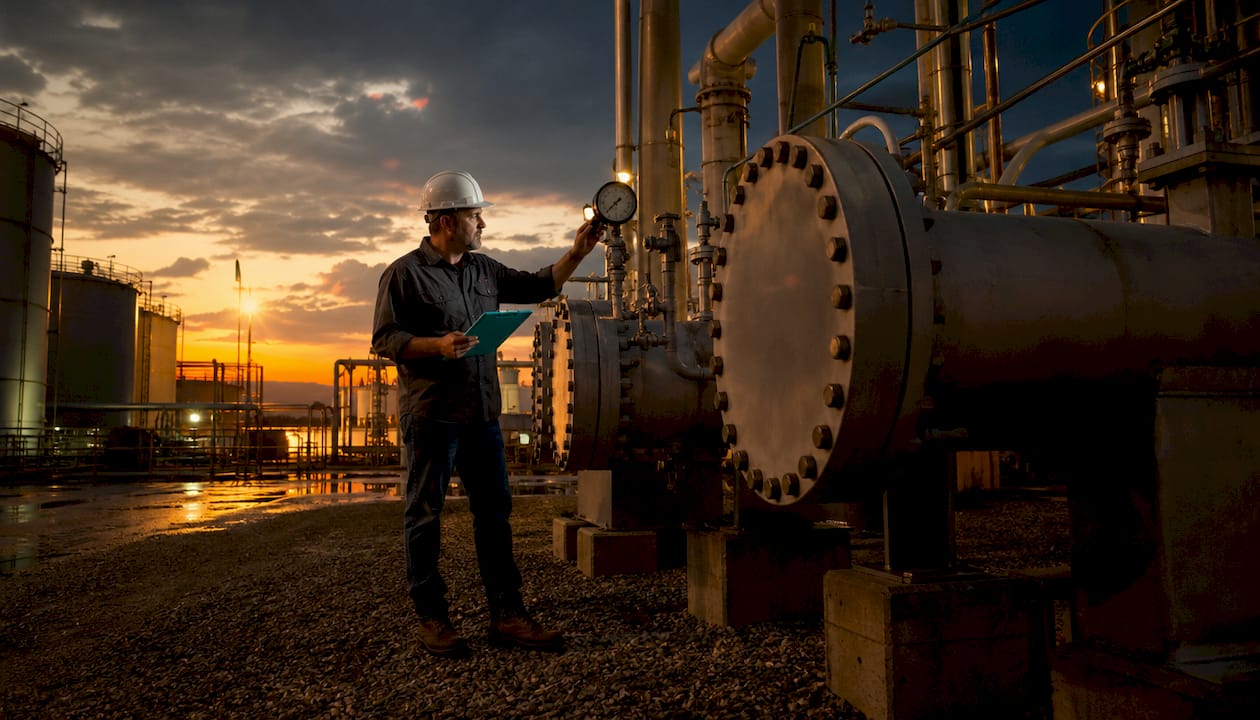
Heat exchange is defined as the transfer of thermal energy between two fluids at different temperatures without mixing them. Heat exchangers accomplish this through conduction, convection, and occasionally radiation in high-temperature systems. The most practical heat exchange examples span refineries, power plants, food processing facilities, and pharmaceutical manufacturing. Standards like ASME, API 661, and TEMA govern design and safety across these applications. Understanding real-world configurations helps engineers select the right equipment and avoid costly performance gaps.
1. Heat exchange examples in shell-and-tube systems
Shell-and-tube heat exchangers are the most widely used type in heavy industry. Their design places one fluid inside a bundle of tubes while a second fluid flows around the outside within a cylindrical shell. This configuration handles thermal duties from 0.1 kW to over 100 MW and pressures up to 600 bar. That range makes them the default choice for refineries, petrochemical plants, and power generation facilities.
Flow arrangement determines efficiency. The counter-flow configuration transfers more heat per unit mass than parallel or cross-flow designs because it maintains a higher average temperature difference along the full length of the exchanger. Most high-duty industrial units use counter-flow or multi-pass arrangements to maximize thermal performance.

Internal baffles are what separate a well-designed shell-and-tube unit from a mediocre one. Baffles force a turbulent zigzag flow on the shell side, which eliminates cold spots and increases heat transfer coefficients. Without proper baffle spacing, shell-side fluid channels around the tube bundle and bypasses the heat transfer surface entirely.
Pro Tip: Inspect baffle-to-shell clearances during maintenance shutdowns. Excessive wear in these gaps allows bypass flow that degrades thermal performance without triggering obvious pressure alarms.
2. Plate heat exchangers in food, pharma, and HVAC
Plate heat exchangers use a stack of corrugated metal plates with alternating hot and cold fluid channels. The corrugated geometry forces turbulence at low flow velocities, which is why plate designs achieve heat transfer coefficients 3 to 5 times higher than shell-and-tube units of equivalent surface area. That efficiency advantage makes them the standard choice in dairy pasteurization, pharmaceutical processing, and commercial HVAC systems.
Three plate configurations cover most applications:
Gasketed plate exchangers allow full disassembly for cleaning and inspection. They operate up to approximately 25 bar and suit hygienic applications where CIP (clean-in-place) protocols are required.
Brazed plate exchangers eliminate gaskets by bonding plates with copper or nickel brazing. They handle higher pressures and suit refrigeration circuits where leakage risk must be near zero.
Welded plate exchangers handle aggressive chemicals and elevated temperatures where gaskets would degrade. They sacrifice cleanability for chemical resistance.
Gasketed plate units top out near 25 bar, which rules them out for high-pressure refinery service. For food and pharma engineers, that pressure ceiling is rarely a constraint. The real advantage is fast disassembly for sanitation audits.
Pro Tip: When sizing a plate exchanger for a new process, add 15–20% extra plate capacity at the design stage. Fouling in food service applications reduces effective surface area faster than most vendors’ fouling factors account for.
3. Air-cooled heat exchangers in water-scarce environments
Air-cooled heat exchangers reject process heat directly to ambient air using finned tube bundles and forced or induced draft fans. They eliminate the need for cooling water entirely. API 661 governs their design for petroleum and natural gas applications, setting standards for fan performance, bundle construction, and noise limits.
These units are the preferred solution in several specific contexts:
Desert refineries where freshwater is scarce and cooling tower makeup water is prohibitively expensive
Offshore platforms where seawater cooling creates corrosion challenges and weight constraints limit equipment size
Remote processing plants without access to reliable water supply infrastructure
Gas compression stations along pipeline networks where continuous operation demands low-maintenance cooling
The trade-off is fan power consumption and sensitivity to ambient temperature. On a hot summer afternoon, an air-cooled unit’s performance drops as the temperature difference between process fluid and air shrinks. Engineers designing for desert environments must account for the worst-case ambient temperature, not the annual average.
Finned tubes are the core of air-cooled exchanger performance. Fins extend the external surface area to compensate for air’s low thermal conductivity. Aluminum fins on carbon steel tubes are the most common combination, balancing cost, weight, and heat transfer performance.
4. Double-pipe, spiral, and finned-tube heat exchangers
These three types cover specialized applications where standard shell-and-tube or plate units are either oversized, impractical, or the wrong geometry for the process.
Double-pipe exchangers
Double-pipe units are the simplest and least expensive heat exchanger design. One fluid flows through an inner pipe while the second flows through the annular space between the inner and outer pipe. They suit small-capacity systems and pilot plant work where low cost and easy modification matter more than thermal efficiency. Scaling up to production volumes almost always means switching to a more compact type.
Spiral heat exchangers
Spiral exchangers wind two flat channels into concentric spirals, creating a self-cleaning flow path. Slurries, fibrous fluids, and effluents that would foul a plate or shell-and-tube unit flow cleanly through the spiral geometry. Pasteurization of fruit pulp and cooling of wastewater effluent are two common applications.
Finned-tube exchangers
Finned-tube designs add extended surface area to the outside of tubes to compensate for low-conductivity fluids like air or gas. They appear in gas-to-liquid heat recovery systems and economizers on boilers.
Type | Best application | Pressure limit | Cleanability |
Double-pipe | Pilot plants, small duty | High | Easy |
Spiral | Slurries, effluents | Moderate | Self-cleaning |
Finned-tube | Gas-side heat recovery | Moderate | Moderate |
Gasketed plate | Hygienic processes | ~25 bar | Full disassembly |
Shell-and-tube | Heavy industrial duty | 600+ bar | Mechanical cleaning |
5. Two-phase and latent heat applications
Two-phase heat exchangers handle fluids that change state during the process. Boilers, condensers, and evaporators use latent heat to achieve heat transfer rates far higher than single-phase liquid-to-liquid systems. The reason is straightforward: latent heat during phase change is orders of magnitude larger than sensible heat for the same temperature rise.
Key two-phase applications include:
Steam generators and boilers in power plants, where water absorbs heat and converts to steam at constant temperature, driving turbines at high efficiency
Surface condensers on steam turbines, where exhaust steam condenses back to water by rejecting heat to cooling water or air, recovering the working fluid for the next cycle
Refrigerant evaporators in HVAC and industrial refrigeration, where refrigerant boils at low pressure to absorb heat from a process or building space
Reboilers at the base of distillation columns, where partial vaporization of the column bottoms drives vapor back up through the trays to separate components
The design challenge in two-phase systems is managing the transition zone where liquid and vapor coexist. Local heat flux must stay below the critical heat flux limit to prevent film boiling, which dramatically reduces heat transfer and can damage tube surfaces. This is where thermal simulation tools become critical for safe design.
Key takeaways
Heat exchanger selection depends on matching the right configuration to the pressure, fluid type, and thermal duty of the specific application.
Point | Details |
Shell-and-tube for heavy duty | Use shell-and-tube units for pressures above 25 bar and thermal duties above 1 MW. |
Plate exchangers for efficiency | Plate designs deliver 3 to 5 times higher heat transfer coefficients in hygienic or medium-duty service. |
Air-cooled for water-scarce sites | API 661-governed air-cooled units eliminate cooling water dependency in desert and offshore environments. |
Flow distribution over surface area | Poor fluid distribution can cut real heat transfer rates by up to 30% below theoretical design values. |
Two-phase for maximum heat flux | Boilers, condensers, and evaporators use latent heat to achieve transfer rates impossible in single-phase systems. |
What I’ve learned from selecting heat exchangers in practice
Engineers often fixate on surface area when evaluating heat exchanger performance. That instinct is wrong. Poor fluid distribution reduces real heat transfer efficiency by up to 30% relative to the theoretical design. A larger exchanger with uneven flow distribution will underperform a smaller, well-distributed unit every time.
The selection logic I use comes down to three questions: What is the operating pressure? What are the fouling characteristics of both fluids? And how often does the unit need to be cleaned? Shell-and-tube units win on pressure and durability. Plate units win on efficiency and cleanability. Air-cooled units win when water is the constraint, not the solution.
One thing that surprises engineers new to thermal design is how much the approach temperature matters. A closer approach temperature means higher efficiency, but it also means a larger, more expensive exchanger. The approach temperature concept forces a direct trade-off between capital cost and operating efficiency. Getting that trade-off right requires accurate simulation, not just rule-of-thumb sizing.
The trend I watch most closely is the integration of real-time monitoring with thermal performance models. Plants that instrument their exchangers and compare live performance against design curves catch fouling and distribution problems weeks before they become shutdowns. That is where the field is heading, and the engineers who build those skills now will have a significant advantage.
— Joel
Jewlztech thermal analysis tools for heat exchanger design
Engineers who work through the examples in this article quickly realize that accurate thermal simulation separates good designs from costly ones. Jewlztech builds thermal management software specifically for this work.

The Thermalysis Toolkit gives engineers a structured environment for heat exchanger analysis, including thermal simulation and CFD-based flow distribution modeling. It handles the two-phase and multi-pass configurations that spreadsheet methods get wrong. If you are sizing a shell-and-tube unit for a high-pressure application or evaluating a plate exchanger for a new hygienic process, the Thermalysis Toolkit is built for that work. Visit Jewlztech to access the full suite of thermal analysis tools.
FAQ
What are the most common heat exchange examples in industry?
Shell-and-tube, plate, and air-cooled heat exchangers are the most common types. They appear in refineries, power plants, food processing, HVAC, and pharmaceutical manufacturing.
How does heat exchange work in a shell-and-tube unit?
One fluid flows through a tube bundle while a second fluid flows around the tubes inside a shell. Internal baffles force turbulent flow on the shell side to improve heat transfer efficiency.
What is the most efficient flow arrangement in heat exchangers?
Counter-flow is the most efficient arrangement because it maintains a higher average temperature difference between the two fluids along the full exchanger length.
When should engineers choose a plate heat exchanger over shell-and-tube?
Choose a plate exchanger when operating pressure stays below 25 bar, the process requires frequent cleaning, or high heat transfer coefficients are needed in a compact footprint.
What governs the design of air-cooled heat exchangers?
API 661 is the primary standard governing air-cooled heat exchanger design for petroleum and natural gas service, covering fan performance, bundle construction, and noise requirements.
Recommended
Comments